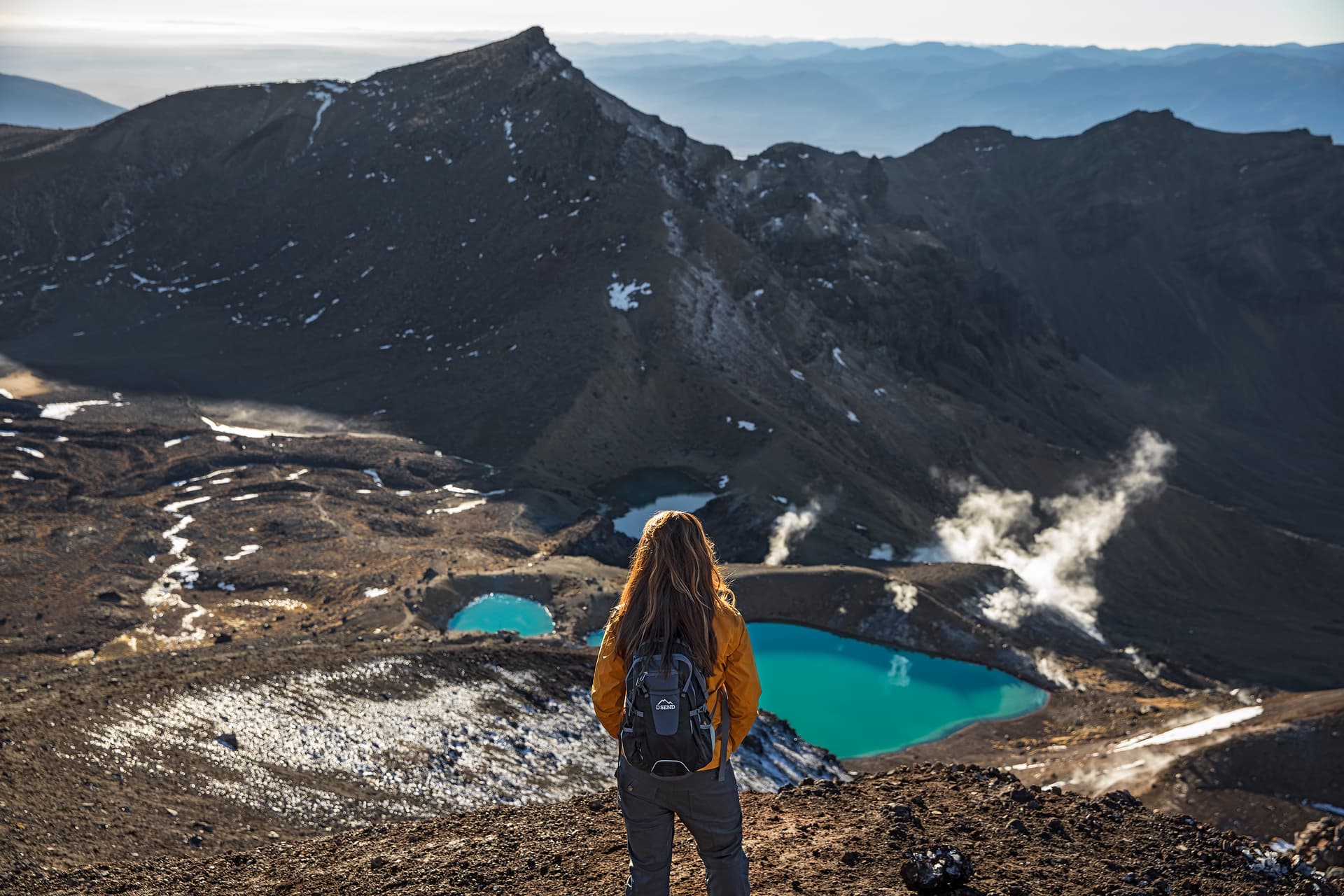
The Tongariro Alpine Crossing is one of New Zealand’s most iconic day hikes. Located in Tongariro National Park, a UNESCO World Heritage area, the trail takes walkers through dramatic volcanic terrain, colourful crater lakes and expansive alpine landscapes.
For travellers visiting during the 2026–27 summer season, the crossing can be a highlight of a North Island itinerary. However, it is a challenging full-day walk that requires preparation, suitable equipment and attention to changing weather conditions.
What is the Tongariro Alpine Crossing?
The crossing is a one-way walk of approximately 20.2 kilometres, typically taking around 7–8 hours to complete.
The route passes through the Mangatēpōpō Valley, climbs towards South Crater and Red Crater, and descends past the striking Emerald Lakes and Blue Lake before reaching Ketetahi.
The highest point is Red Crater, at approximately 1,886 metres above sea level.
This is not a casual stroll. The track includes steep climbs, uneven volcanic rock and exposed sections. A good level of fitness is recommended.
What to expect during summer 2026–27
Summer, generally from November to April, is the main walking season. Longer daylight hours make the crossing more accessible, but alpine conditions can still be unpredictable.
Walkers should be prepared for:
- Strong winds and sudden temperature drops.
- Rain, cloud and reduced visibility.
- Slippery or loose volcanic surfaces.
- Snowfall, which can occur even outside winter.
The 2025 fires affected areas near the start of the crossing. Visitors may see blackened vegetation and signs of natural recovery. Respect the restorative rāhui placed over affected areas, remain on marked tracks and avoid entering restricted areas.
Always check the Department of Conservation (DOC) track updates and weather forecast before setting out.
Booking and transport: What you need to know
DOC recommends booking to use the Tongariro Alpine Crossing, including when walking only part of the track. There is no charge for the track booking.
During summer, visitor parking is restricted at the Mangatēpōpō road end. A shuttle is generally the most practical way to reach the start and return from the finish.
The crossing is a point-to-point walk, so transport should be organised in advance. Shuttles operate from nearby towns and accommodation areas, including National Park Village, Tūrangi, Ohakune and Taupō.
Book your track slot first, then confirm your shuttle arrangements.
What should you pack?
A well-prepared day pack should include:
- Sturdy hiking boots or shoes with good grip.
- Waterproof jacket and trousers.
- Warm layers, including a fleece or merino layer.
- Sun protection: hat, sunglasses and sunscreen.
- Around 2–3 litres of drinking water.
- A packed lunch and high-energy snacks.
- A fully charged phone and a personal locator beacon (PLB) if available.
- Basic first-aid supplies.
Water along the track is not suitable for drinking, so carry enough for the entire walk.
Respect the cultural significance of Tongariro
Tongariro is more than a spectacular landscape. It is a sacred place for Māori, particularly Ngāti Hikairo ki Tongariro and Ngāti Tūwharetoa.
Visitors are encouraged to respect the maunga (mountains), follow local guidance and stay on designated tracks. Climbing the sacred peaks, including Mount Ngauruhoe, is considered disrespectful.
Manaaki Rangers may be present during the summer season to share cultural stories and help visitors understand the significance of the area.
Is the crossing suitable for everyone?
The Tongariro Alpine Crossing is not suitable for every traveller. It is a long, exposed and physically demanding walk.
It may not be appropriate for:
- Visitors with limited hiking experience or fitness.
- Young children.
- Travellers uncomfortable with steep descents or exposed terrain.
- Anyone attempting it in poor weather without suitable preparation.
If conditions are unsuitable, consider shorter alternatives such as the Taranaki Falls Track or Tama Lakes Track.
Planning Tongariro as part of your New Zealand holiday
Many travellers include the crossing when touring the central North Island between Auckland, Rotorua and Wellington.
Allow at least one night near Tongariro National Park before the walk, particularly if you are travelling from a distant destination. An early start, shuttle transfer and full day on the track make it unwise to schedule a long drive immediately afterwards.
For wider itinerary ideas, explore our New Zealand self-drive holiday planning guide.
The Tongariro Alpine Crossing can be an unforgettable experience when planned carefully. Check the latest track conditions, prepare for alpine weather and give yourself enough time to enjoy the landscape safely.
Planning a New Zealand North Island itinerary? The Rayar Way Tours can help organise customised journeys, local transport and experiences for international travellers and travel partners.
Visit https://rayarway.nz/ to start planning your New Zealand adventure.
Comments (0)
No comments yet. Be the first to add one.